The ski hills of Idaho range from large destination resorts to small community mountains, so the best choice depends on where you want to stay, who needs lessons, and how much winter driving you want to do. Northern Idaho suits a regional resort circuit; Boise and McCall work for different west-central trips; Sun Valley anchors the Wood River Valley; and southern and eastern Idaho offer smaller-area itineraries as well as access to the Tetons.
This guide organizes Idaho ski resorts by travel region rather than pretending there is one winner for every skier. Use the Idaho skiing hub for individual mountain guides. Ski Idaho, the state ski-area association, promotes 19 alpine destinations, including border-region mountains. That tourism grouping is useful for planning, but it should not be mistaken for a claim that every associated base area lies entirely inside Idaho.
Choose a ski trip by the way you travel
- One mountain and a full vacation: compare Sun Valley, Schweitzer, and Tamarack, checking the specific relationship between your lodging and the lifts.
- A city trip with a ski day: look at Bogus Basin from Boise or a suitable eastern Idaho mountain from your chosen town base.
- A regional circuit: group nearby areas instead of combining northern Idaho and the Wood River Valley in a short visit.
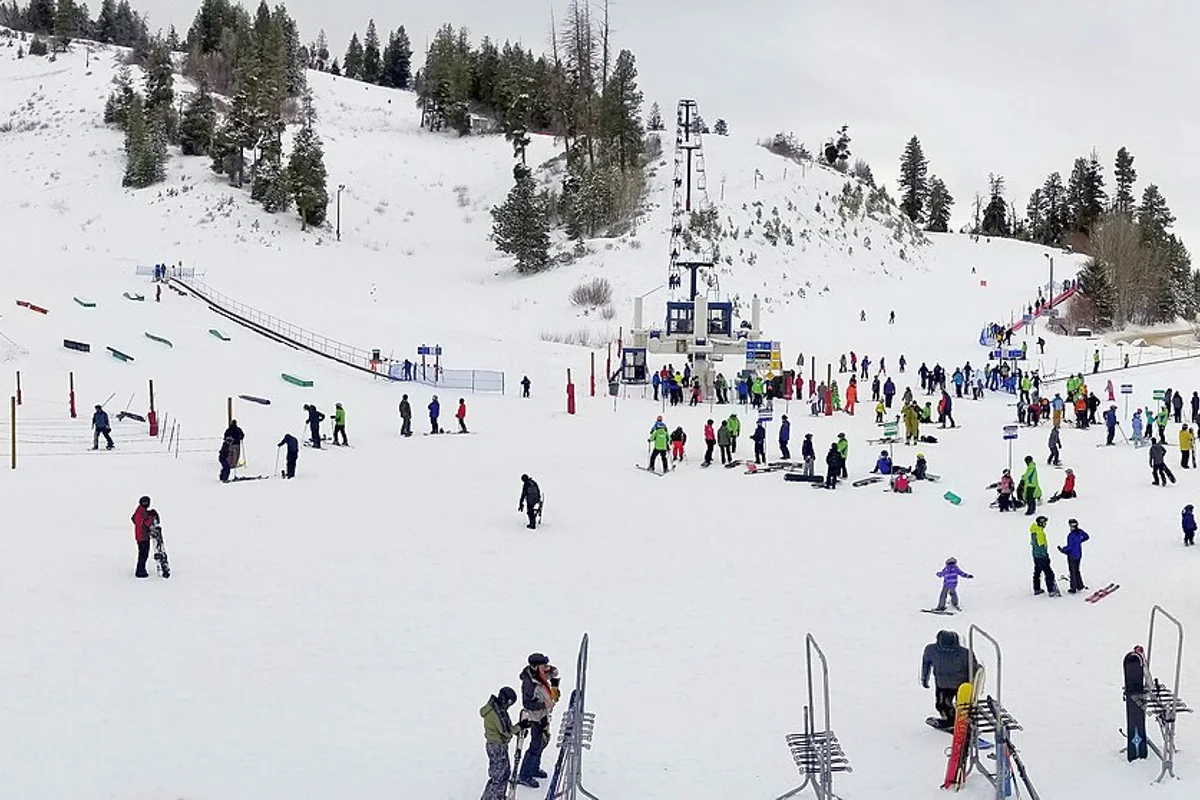
- A first lesson: prioritize an appropriate school, rental package, and learning area over vertical drop or acreage.
- A community-hill outing: check the operating calendar before booking travel; smaller hills may have more limited schedules.
There is a difference between the top ski resorts in Idaho for a weeklong holiday and the right ski hill for two hours of practice. A large mountain can supply terrain variety, but a compact learning area can make a beginner's day easier to organize. Start with your least experienced skier's needs, then decide how the rest of the group can use the same base.
Ski resorts in northern Idaho
Schweitzer and a Sandpoint base
Schweitzer is the large destination option above Sandpoint, with bowl, tree, and groomed terrain described by Ski Idaho. It suits travelers who want to focus several ski days on one mountain and compare slopeside accommodation with a town stay. Those two lodging strategies produce different evenings and different morning transportation needs, so choose deliberately.
Sandpoint makes sense to research if walking around a lakeside town after skiing is part of the appeal. Staying on the mountain instead may reduce daily driving, depending on the exact property. Do not choose lodging from a lake-view photograph alone: check the actual winter route and mountain access arrangements.
Silver Mountain and Lookout Pass
Silver Mountain and Lookout Pass form the other core stops in Ski Idaho's northern loop. Silver Mountain's gondola access from Kellogg gives it a different arrival experience from a conventional drive-to-the-ski-base mountain. Lookout Pass is associated with the I-90 corridor at the Idaho-Montana border. Check operating reports for the actual lifts and terrain available at either destination.
A northern Idaho trip does not require changing hotels nightly. Choose a base around your main ski days and add another mountain only when the road and weather outlook support it. Spokane is the airport identified in Ski Idaho's northern travel loop, but compare the full winter transfer with flight convenience before booking. A late arrival and a long unfamiliar drive are not automatically a good combination.
North-central Idaho's community ski areas
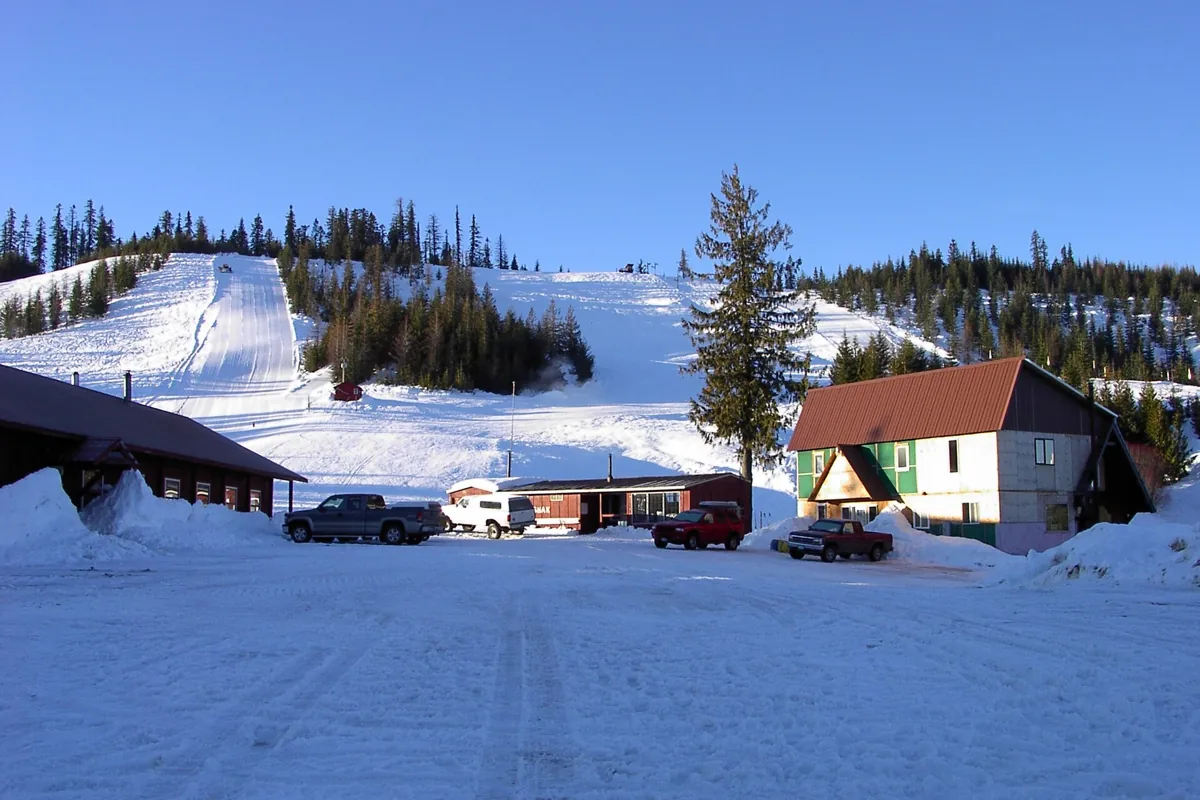
Not all northern Idaho ski areas are large resorts. Bald Mountain near Pierce, Cottonwood Butte, and Snowhaven belong in a statewide survey because they offer a different scale of winter outing. They are worth researching for local skiing and community-hill atmosphere, rather than assuming that a destination-resort itinerary is the only way to experience Idaho snow skiing.
Check each hill's calendar, lesson options, rental arrangements, and snow report separately. A small area may not operate on the same days as a larger resort, particularly early or late in winter. Also distinguish Bald Mountain at Pierce from Sun Valley's Bald Mountain: they are different ski destinations in different parts of the state.
Boise, McCall, and the west-central mountains
Bogus Basin from Boise
Bogus Basin is the obvious starting point for a Boise-centered ski trip. The nonprofit recreation area combines a substantial alpine footprint with night skiing, making a city-and-mountain itinerary possible. However, its winding approach road means proximity should not be confused with an effortless commute. Allow time for winter conditions, parking, rentals, and lesson check-in.
This is a useful choice for a mixed-interest party staying in Boise, where not everyone needs to ski every day. Confirm the purchased session and the current night-terrain map if you intend to ski after dark. Evening access should be planned as its own outing, not as a guarantee that the daytime mountain remains fully open.
Brundage, Tamarack, and Little Ski Hill
Ski Idaho groups Brundage Mountain, Tamarack Resort, and Little Ski Hill into a west-central loop. Brundage is closely associated with a McCall stay, Tamarack offers a resort-centered option in the Donnelly area, and Little Ski Hill adds a smaller community mountain to the comparison. They are not interchangeable just because they share a travel region.
Use McCall as a starting point for researching a town-based trip, then compare the drive to your primary mountain. If your group plans lessons at one area all week, lodging closer to that routine may matter more than the possibility of skiing a second area once. Keep transfer days realistic on winter roads.
Sun Valley and the Wood River Valley
Sun Valley ski resort is especially important to understand as two mountains: Bald Mountain supplies longer, sustained descents, while Dollar Mountain is the resort's beginner-oriented choice. Families should choose lessons and arrival locations with that distinction in mind. A reservation labeled simply “Sun Valley” is not enough information to know which base your morning requires.
Ketchum is one of Idaho's signature ski towns, but the broader valley supports several lodging strategies. Compare downtown convenience, village surroundings, and access to your preferred base through our lodging guide. Rotarun near Hailey offers a much smaller community-hill comparison, while Soldier Mountain is a separate trip in the Fairfield area. Check each independently rather than treating them as part of one resort ticket.
Southern Idaho: Pomerelle and Magic Mountain
Pomerelle, near Albion, and Magic Mountain, in the mountains south of Twin Falls, suit travelers looking beyond the largest resort names. They can be appealing for focused ski days, but the basics still decide the trip: open terrain, available instruction, suitable equipment, and a manageable approach road.
For Pomerelle, compare Albion-area accommodation with a broader Burley search. For a Magic Mountain visit, research the route from your chosen Twin Falls-area base rather than assuming every hotel in the region is equally convenient. Ski Idaho includes these mountains in a southern loop with Pebble Creek. Treat that as a planning framework, not a suggestion to undertake the whole loop during a single short weather window.
Eastern Idaho and border-region skiing
Pebble Creek near Pocatello and Kelly Canyon in the Idaho Falls region are the main starting points for eastern Idaho comparisons. Read the individual terrain descriptions and lesson offerings before selecting a family mountain. Neither a smaller resort name nor a shorter drive proves that the terrain is easy.
Grand Targhee is reached through the Driggs side of Teton Valley but is geographically in Wyoming. It belongs in an Idaho travel discussion because the Idaho approach and town bases are central to many visits. Lost Trail occupies another border-region position, at the Idaho-Montana divide. Check the official location, driving route, operating days, and applicable local time when planning either trip.
What to verify before booking Idaho skiing
Start with the Ski Idaho regional travel guide, then use each resort's official site for tickets, instruction, and current conditions. Ticket costs and pass agreements change, so do not build a budget around an undated comparison table. Confirm age categories, blackout dates, reservation requirements, and whether a lesson package actually includes rentals and lift access.
Check highways through Idaho 511 and consult the mountain for its final access road. Avoid using average snowfall as a promise, or advertised acreage as a count of what will be open. The most practical Idaho ski vacation keeps a regional focus, matches terrain to the group, and allows weather to change the plan without forcing a long drive.
By Idaho Uncovered editors.
Questions before you go
Which ski resorts are in northern Idaho?
The main northern resort circuit includes Schweitzer, Silver Mountain, and Lookout Pass. North-central Idaho also has community ski areas such as Bald Mountain near Pierce, Cottonwood Butte, and Snowhaven.
Which Idaho ski resort is best for beginners?
Choose by lesson availability, the learning area, and your lodging base rather than by resort size. Dollar Mountain is Sun Valley’s beginner-oriented mountain; other areas also offer beginner terrain and instruction that should be checked directly.
Is Grand Targhee in Idaho?
Grand Targhee is in Wyoming, with an approach through the Driggs side of Idaho’s Teton Valley. It is often included in Idaho ski-trip planning because of that access and nearby Idaho town bases.
Sources & planning resources
- Ski Idaho: state ski-area directory
- Ski Idaho: regional winter travel loops
- Ski Idaho: resort list and regional geography
- Ski Idaho: resort descriptions
- Ski Idaho: Magic Valley ski areas
- Bogus Basin: getting to the mountain
- Sun Valley: choosing between Bald and Dollar mountains
- Grand Targhee: official address and travel information
- Lost Trail: location on the Idaho-Montana border
- Idaho Transportation Department: Idaho 511 road conditions