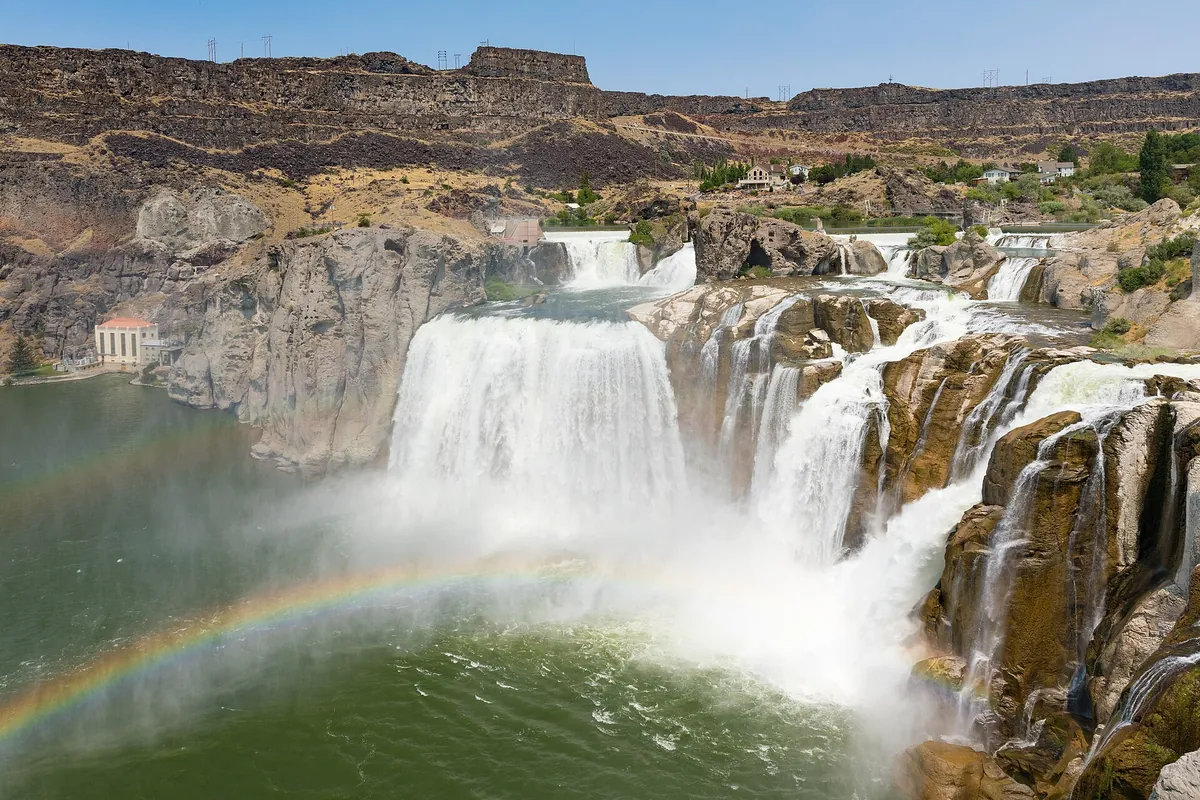
Shoshone Falls is often what travelers mean when they search for the biggest waterfall in Idaho: a Snake River waterfall measuring 212 feet high and about 900 feet wide. It is taller than Niagara’s Horseshoe Falls, but not wider, and Niagara carries much more water. Calling Shoshone “bigger than Niagara” without that distinction is misleading.
The useful question for a trip is not which waterfall wins a size contest. It is whether the Snake River will be putting on a strong show when you arrive. Start with the measurements below, then use the seasonal advice to decide when this Idaho sightseeing stop belongs on your route.
How tall is Shoshone Falls compared with Niagara?
The City of Twin Falls lists Shoshone Falls at 212 feet tall. Niagara Parks lists the Canadian Horseshoe Falls at 188 feet tall in its 2026–27 study guide. Using those published figures, Shoshone is about 24 feet taller. That is a comparison between particular waterfalls, not between two entire river systems.
| Measurement | Shoshone Falls | Canadian Horseshoe Falls |
|---|---|---|
| Published height | 212 feet | 188 feet |
| Approximate crest width | 900 feet | 2,200 feet |
| River | Snake River | Niagara River |
Niagara Falls is a group that includes Horseshoe Falls, American Falls and Bridal Veil Falls. Comparing Shoshone with the best-known Horseshoe Falls keeps the discussion clear. You may see different Niagara height figures elsewhere because measurements and reference points vary. The figures here follow Niagara Parks rather than mixing numbers from unrelated travel pages.
Why Niagara is still the larger spectacle by volume
Height describes the drop; width describes the crest; flow describes how much water passes over it. A tall waterfall can be narrow or nearly dry. A shorter one can move a much larger river. These measurements answer different questions, so “biggest” is not a precise ranking unless the writer identifies the measure.
Niagara Parks reports more than six million cubic feet of water per minute over Horseshoe Falls during peak daytime hours. By contrast, Twin Falls describes typical spring peaks at Shoshone of 10,000 to 12,000 cubic feet per second. Converting those units puts the Niagara figure above 100,000 cubic feet per second. These are published descriptions, not simultaneous readings, but they show why the extra height at Shoshone does not mean greater volume.
Shoshone’s broad basalt setting and horseshoe-shaped drop explain the nickname “Niagara of the West.” Treat that as a descriptive nickname, not a claim that the two waterfalls behave alike.
Is Shoshone the biggest waterfall in Idaho?
It is one of Idaho’s signature large waterfalls, but the word “biggest” needs a qualifier. The city calls it one of the largest natural waterfalls in the United States; that does not establish a statewide record for every possible measurement. This guide does not label it Idaho’s tallest waterfall or claim a formal volume record.
For a road-trip choice, its appeal is straightforward: a wide waterfall, a deep Snake River canyon and developed viewing areas in the Twin Falls area. Compare the experience with Mesa Falls or browse the broader Idaho waterfalls guide instead of choosing solely from a superlative.
When does Shoshone Falls have the most water?
Spring is the strongest starting point. The city explains that melting snowpack feeds the river and that spring is generally the best season for viewing. A heavy snow year can produce larger flows, but the calendar alone cannot promise a full curtain of water. Snowpack, upstream management and irrigation demand all matter.
- Spring: prioritize this season if the waterfall itself is the reason for your trip. Check current information before committing to a long detour.
- Summer: expect irrigation diversions to reduce the amount of water crossing the falls. Early summer and late summer need not look alike.
- Fall: the city warns that the falls can appear nearly dry as upstream reservoirs recharge.
- Winter: make road and weather checks part of the decision rather than assuming the park approach is straightforward.
The dramatic photograph on a travel page is a moment in time, not a condition report. Look at the city’s Shoshone Falls information for current notices and links before leaving.
Planning the Twin Falls stop
The city directs visitors to 4155 Shoshone Falls Grade Road, Twin Falls. Use the attraction’s full name and that official address rather than navigating to the community of Shoshone. For the approach, viewpoints and nearby activities, see the dedicated Shoshone Falls visitor guide.
The National Park Service describes viewing platforms, hiking trails, picnic areas and restrooms at the city park. It also notes steps to the primary platform and additional viewpoints for visitors with accessibility needs. If step-free access is essential, confirm the current route with the city before arrival; do not assume every overlook has the same access.
Keep the waterfall visit flexible. Walk to the viewing areas first, then decide whether to stay for a picnic or continue through Twin Falls. The Perrine Bridge is another canyon-focused stop to consider, especially when the falls have low flow. Avoid turning a short sightseeing day into a schedule that depends on perfect water and weather.
What to check before driving from Boise
Use a live route planner for your starting address and the official falls entrance. A Boise-to-Twin Falls estimate is not the same as a drive to the viewing area, and construction or a stop in town can change the day. No fixed driving time or mileage is more useful than checking your actual route.
Confirm park notices, current admission information and road conditions before departure. Bring a layer for spray or wind, keep behind barriers and leave yourself time to enjoy the canyon even if the river is lower than expected. Shoshone Falls does not need to outsize Niagara in every category to justify a visit.
Questions before you go
Is Shoshone Falls bigger than Niagara Falls?
Shoshone Falls is taller than the Canadian Horseshoe Falls using the published figures of 212 and 188 feet. Horseshoe Falls is wider and carries much more water.
When is the best time to see Shoshone Falls?
Spring is generally best because of snowmelt. Flow varies with snowpack, irrigation diversions and upstream reservoir management.