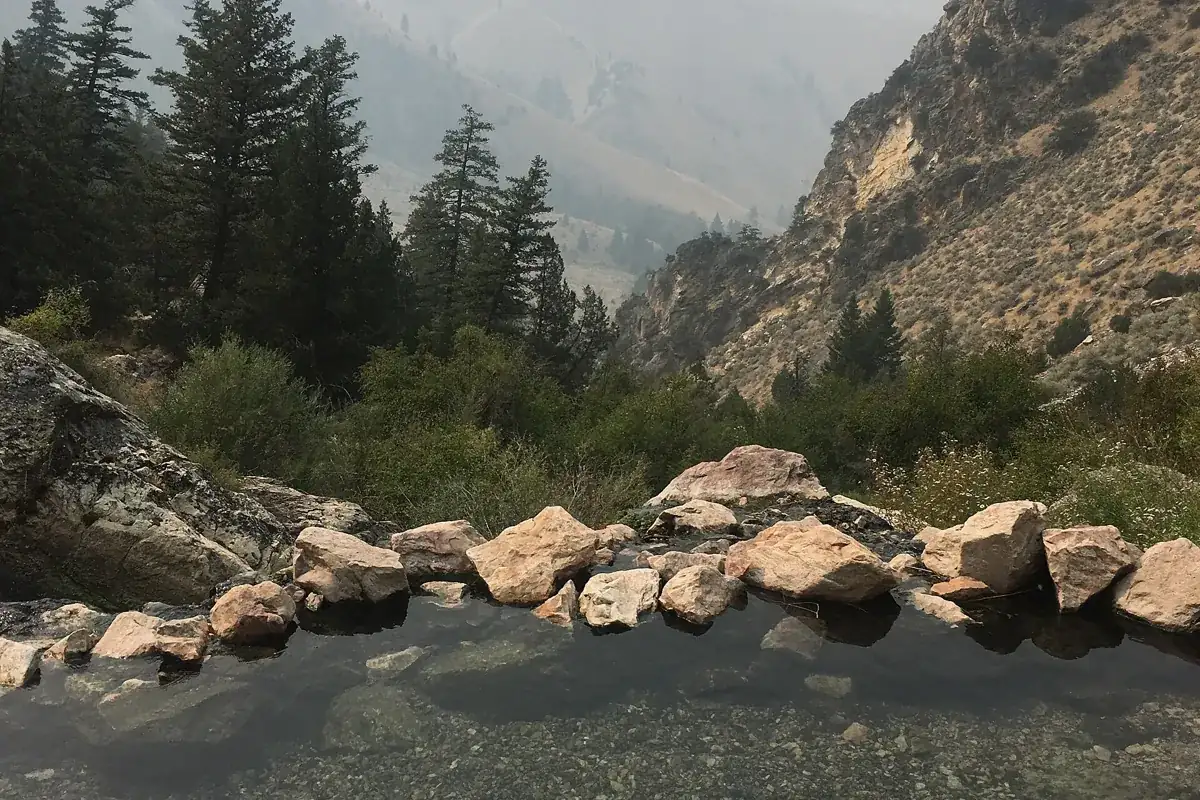
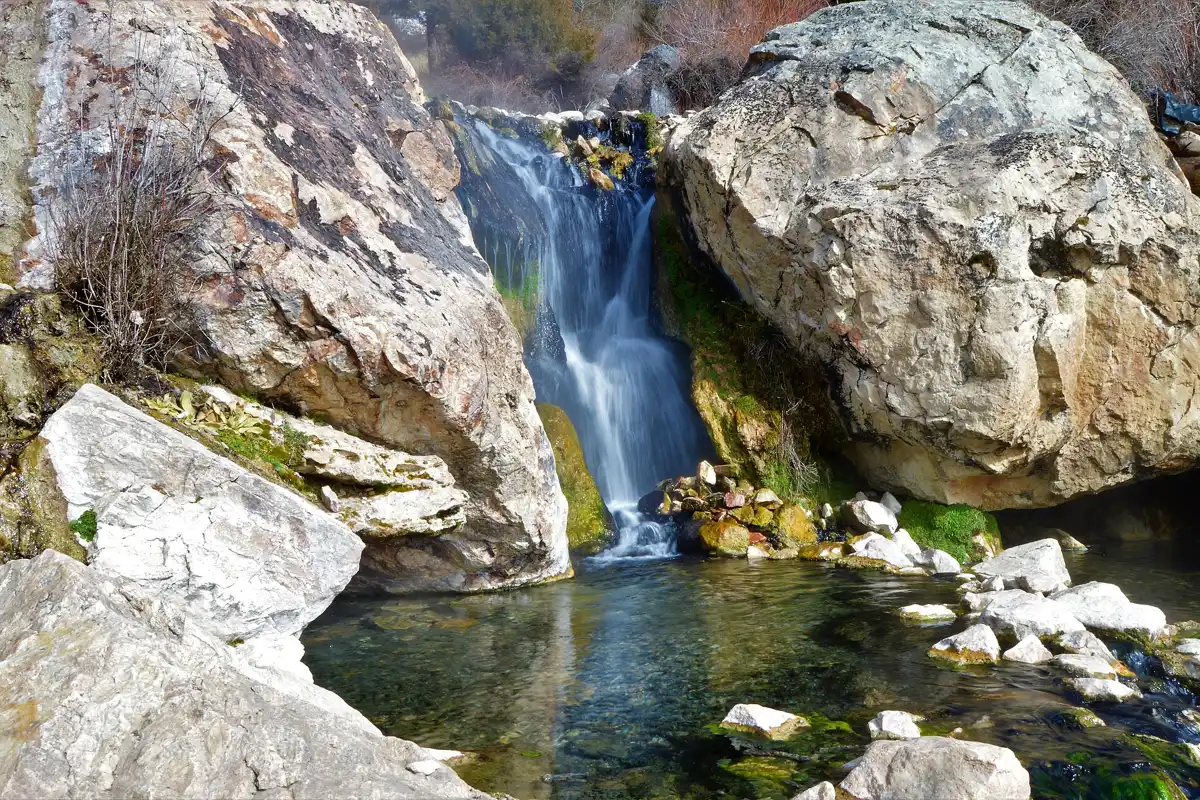
Goldbug Hot Springs is a hike-in group of natural pools near Elk Bend, south of Salmon, Idaho. Visit Idaho describes the approach as two miles each way, so plan on a roughly four-mile round-trip hike rather than a roadside dip. The key decisions are when to start, whether the trail is suitable for your group and how to leave enough daylight for the descent.
Goldbug belongs on a statewide hot springs itinerary, but it is not an interchangeable substitute for a developed pool. There is no promise of a private soaking spot, a consistent water temperature or an easy walk back to the car.
Where is Goldbug Hot Springs?
The springs sit in the mountains east of the Salmon River corridor near Elk Bend. The Bureau of Land Management gives the highway turnoff as 23 miles south of Salmon on US 93. South of Elk Bend, turn east onto the county-maintained road and follow it for 0.3 mile to the trailhead. Use the BLM directions as your starting reference, then follow posted signs on arrival.
Download directions and a trail map before leaving a reliable connection. Set navigation to the trailhead, not merely the hot spring coordinates: a map pin at the pools will not explain road access or the legal walking route. Do not block residential driveways, gates or the county road if the trailhead parking area is full.
The Goldbug Hot Springs hike
Visit Idaho describes a well-traveled trail with a steep final approach using rocks and stairs. Its published distance is two miles each way. The exact effort depends on heat, snow, footing and how much you carry; a mileage figure alone is not a difficulty rating.
Wear hiking shoes for the approach and carry separate footwear if you want it at the pools. A wet swimsuit, towel and drinking water make the return pack heavier than it may look when you leave the car. Start with enough water for the hike itself, rather than assuming water beside a hot spring is potable.
The uphill trip is only half the outing. Before settling into a pool, decide when your group needs to leave. Give slower hikers room to descend the stair and rock sections at their own pace, especially when surfaces are damp or temperatures are dropping.
Private property and dogs at the start
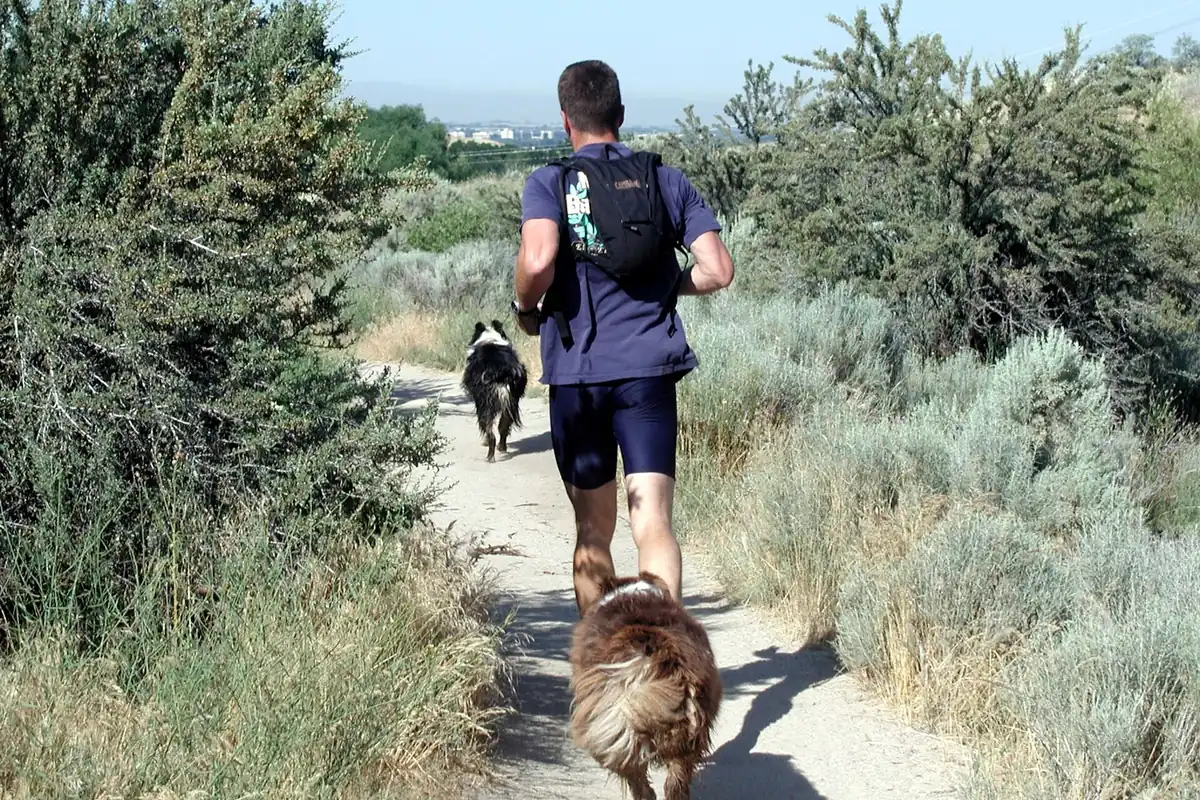
The first quarter-mile crosses private property under a public-access easement. BLM explicitly requires dogs to be leashed on that section. Keep to the access trail, give residents space and avoid stopping on private land to picnic or change clothes.
That verified rule is not a blanket statement about every part of the outing. Read all current trailhead notices before bringing a dog farther. Even where an animal is allowed, a crowded soaking area may be uncomfortable for it and for other visitors. Keep animals out of soaking pools, carry waste out and do not leave a dog tied beside hot water while everyone else soaks.
What to expect at the pools
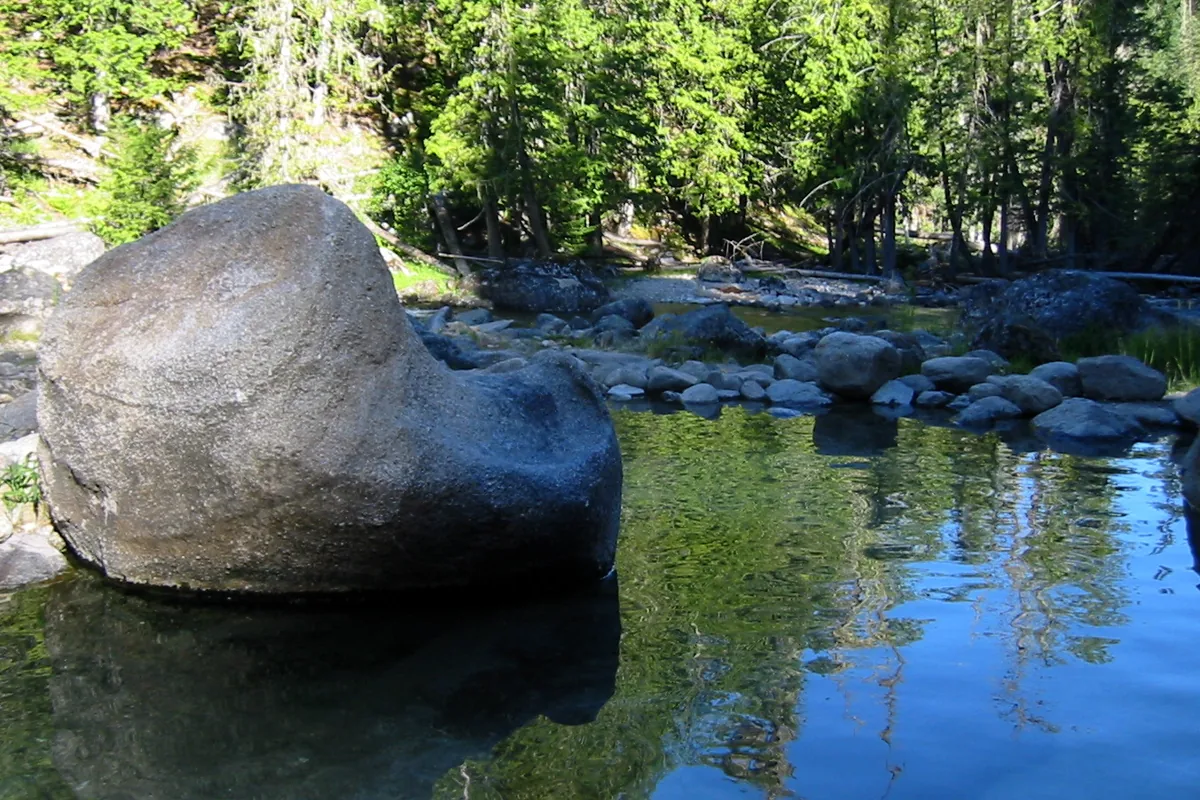
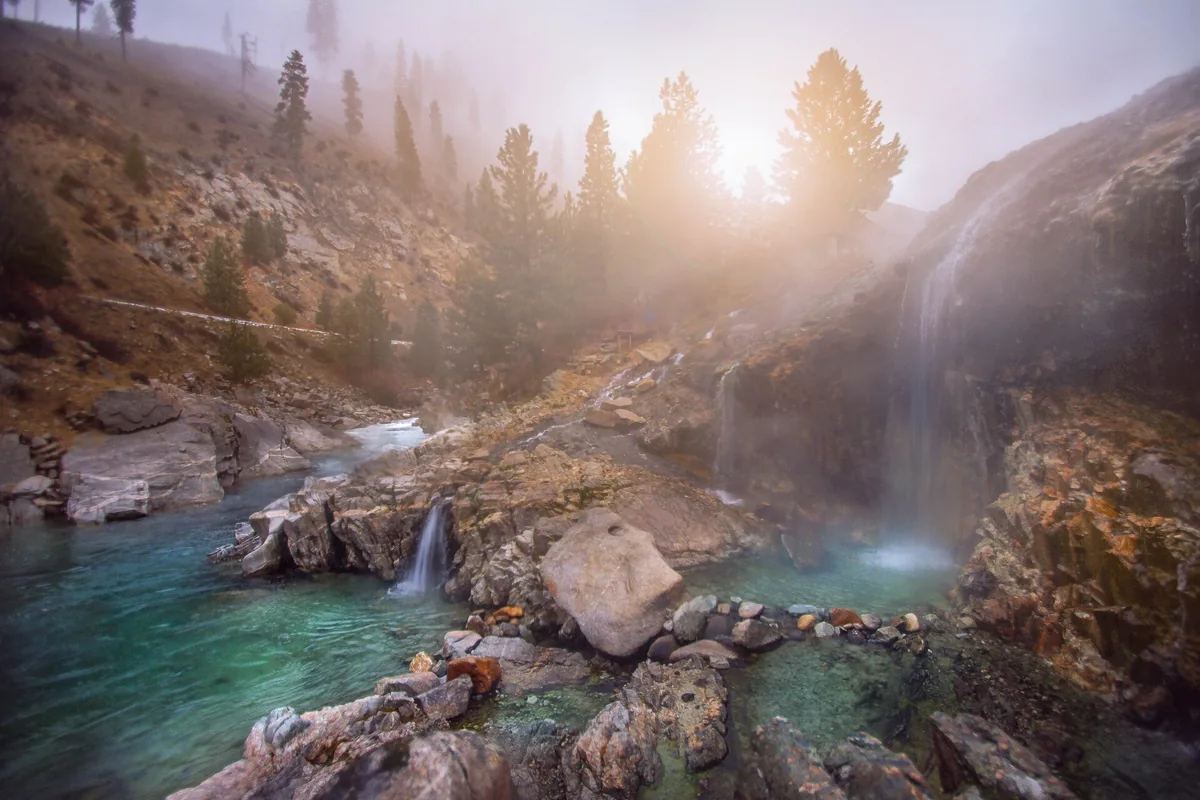
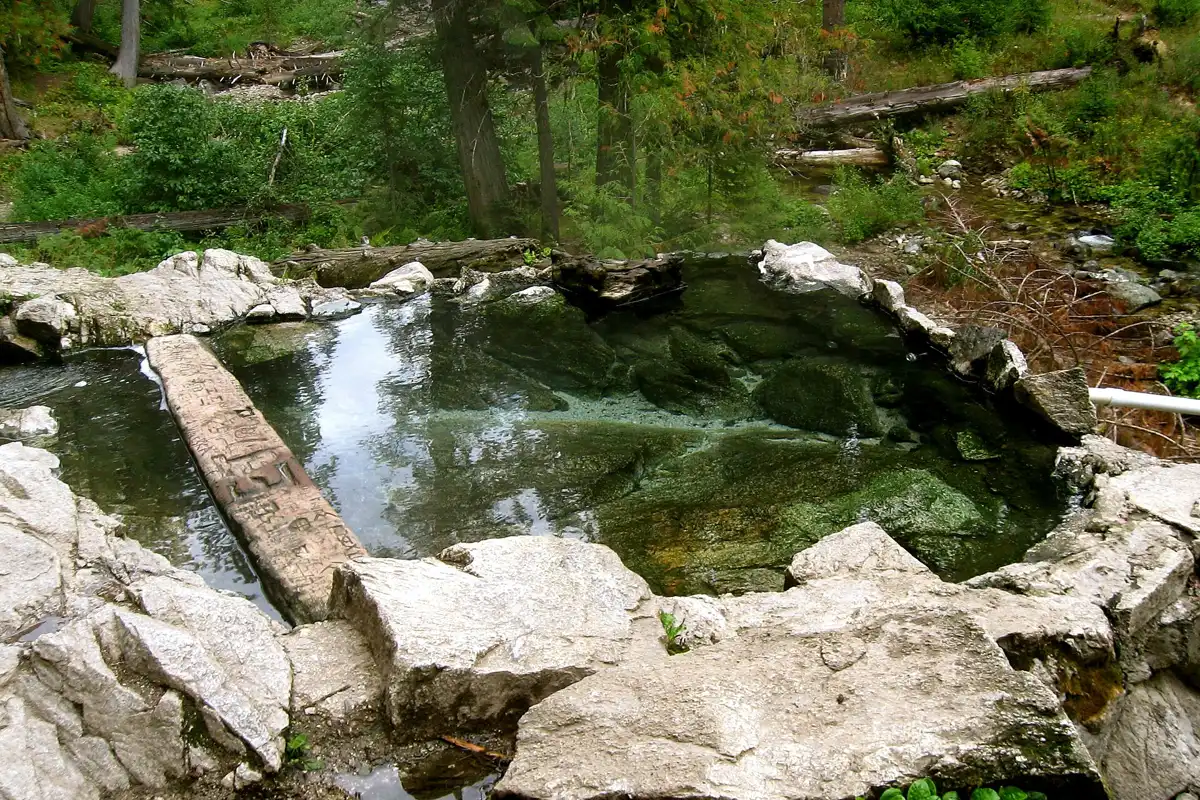
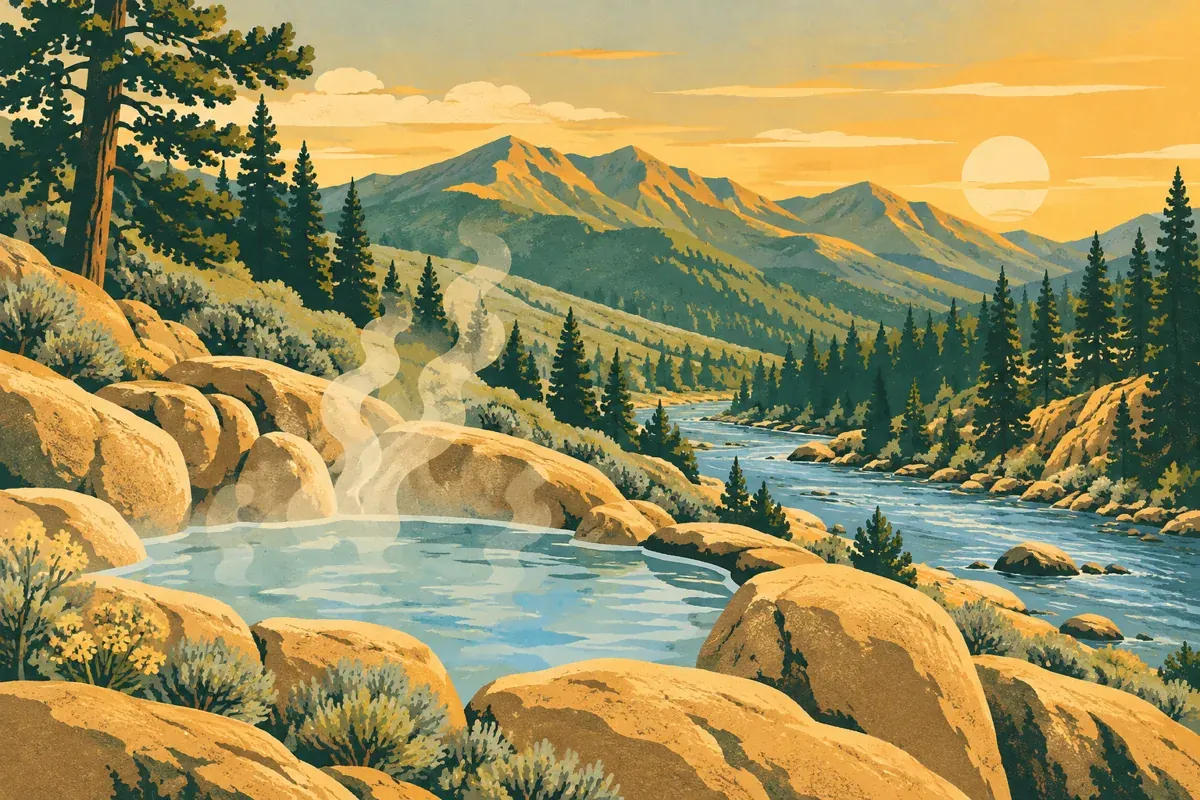
The appeal is the combination of flowing water, rock and mountain views. Natural pools do not operate like a maintained swimming facility: depth, flow and temperature can vary. Check water carefully before entering and stay away from very hot inflows. If a pool is uncomfortable, get out rather than assuming you will adjust.
Keep your head above untreated water, do not drink it and skip soaking if you have an open wound or feel unwell. Bring drinking water to the pool edge and take cooling breaks. Children need direct supervision; natural hot springs are not supervised swimming areas.
Share the limited space without claiming a pool for a large group. Pack out food scraps, cans and every piece of litter, including items left by someone else if you can safely carry them. Soap does not belong in the springs or creek, including products labeled biodegradable. Leave rocks and water channels as you find them.
Camping near Goldbug
A Salmon-Challis National Forest order prohibits camping within 500 feet of Gold Bug Hot Springs. The published order runs from March 30, 2023, through March 30, 2028, unless rescinded. Check the order and attached map before planning an overnight trip.
Being more than 500 feet away does not automatically make a spot a legal campsite. Property boundaries, other restrictions and suitable low-impact sites still matter. For a straightforward first visit, consider staying in Salmon and making Goldbug a daytime hike instead of trying to camp beside the pools.
Choosing a season and a backup
Visit Idaho favors fall for moderate temperatures and drier footing. Summer can make the exposed approach hot; spring thaw can mean mud, and winter adds snow and ice. None of those broad patterns establishes today's conditions. Check the forecast, road information and land-manager alerts close to departure, then turn around if the approach is beyond your equipment or comfort.
If your road trip continues elsewhere, compare Kirkham Hot Springs and Jerry Johnson Hot Springs in advance. They are different destinations, not nearby trailhead overflow options. Use our Idaho hot springs planning guide to organize a route with realistic driving and hiking days.
Questions before you go
How long is the Goldbug Hot Springs hike?
Visit Idaho describes a two-mile approach, about four miles round trip. Allow time for steep footing, a soak and the return hike; no single walking time fits every group.
Can you camp at Goldbug Hot Springs?
The published Forest Service order prohibits camping within 500 feet of the springs. Check the current order, its map and other land-use restrictions before choosing any campsite.