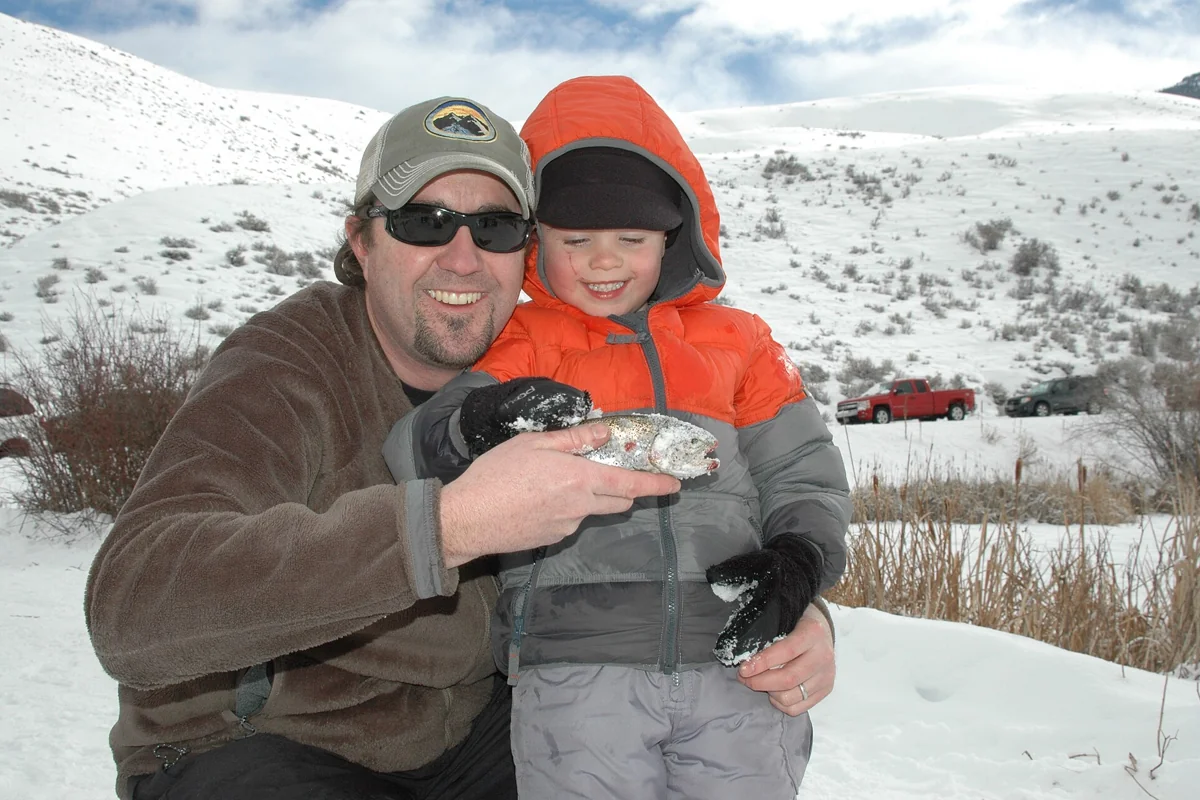
Ice fishing in Idaho can mean targeting perch on a large reservoir, fishing for stocked trout at a smaller lake, or planning a more specialized trout trip in the Upper Snake region. The best choice depends on your target fish, winter access, and current conditions. A lake’s reputation never establishes that the ice is safe on the day you arrive.
Choose the fishery before choosing the weekend
Idaho Fish and Game’s official ice-fishing destination list is a useful starting point. Its recommendations apply only when conditions allow. Use it to narrow the region and species you want, then check the current Fishing Planner entry, access information, and regulations for that specific water.
For a first trip, favor simple logistics over the biggest fish. A manageable walk, a realistic weather window, and a plan to warm up matter more than a dramatic catch photograph. Consider going with an experienced partner or a properly researched guide, and be prepared to cancel without trying to justify the drive.
Lake Cascade: a perch-focused destination
Fish and Game highlights Lake Cascade for large perch, including state records, as well as trout and other species. It is a large water body, so choose an access area and fishing plan rather than arriving with only “Lake Cascade” entered into a navigation app.
The Lake Cascade State Park guide can help with regional orientation, while McCall is another town to consider when planning the wider trip. Our Payette Lake guide provides context for that neighboring town’s waterfront, not an ice-safety report. Check current parking and winter access separately; a summer launch or shoreline road should not be assumed available after snowfall.
Horsethief Reservoir: another Cascade-area option
Fish and Game lists Horsethief Reservoir, east of Cascade, as a frequently stocked rainbow-trout fishery. That makes it worth comparing with Lake Cascade when trout are your priority. Stocking history is background, not a guarantee of fish activity on a particular day.
Confirm the route to your intended access point and how far you will need to carry equipment. Keep your setup manageable if you do not have a confirmed plan for moving a shelter, auger, and extra clothing through snow. An alternative water is only useful if its ice and access conditions also work. If you are considering an overnight outdoors, begin with our Idaho camping guide, then verify that the specific site permits winter use and suits your equipment and experience.
Magic Reservoir: trout and perch in the south-central region
Magic Reservoir, east of Fairfield and north of Shoshone, appears on Fish and Game’s list for trout and perch. It offers another regional choice for anglers who do not want to build a trip around the McCall or Island Park areas.
Choose your shoreline access carefully and check current conditions rather than interpreting a broad reservoir recommendation as a report from every bay. Reservoir levels, open water, snow, and access can change the practical outing. If you want nonfishing options for companions, plan those separately through the Idaho things-to-do hub.
Henrys Lake: trout with important seasonal rules
Fish and Game describes Henrys Lake, north of Island Park, as a major trophy-trout destination. It deserves special attention to regulations: older general destination pages can carry season descriptions that no longer match newer rule material. Do not copy a season date from an old article into your trip plan.
Use the current official fishing seasons and rules and the lake’s current Fishing Planner entry to determine whether harvest or catch-and-release rules apply. Match the fish you intend to keep with the exact water-specific rule. Our Island Park guide provides nearby trip context, not a substitute for fishery regulations.
Winchester Lake and Ririe Reservoir: two more comparisons
In north-central Idaho, Fish and Game lists Winchester Lake for trout, perch, and other species. It is part of Winchester Lake State Park, so check park entry requirements along with fishing rules. It is a different regional choice, not a nearby add-on to a Henrys Lake weekend.
In eastern Idaho, Ririe Reservoir is another official ice-fishing destination, with trout, kokanee, perch, and other species listed by Fish and Game. Choose it only after checking winter access and the regulations for your target species. Idaho Falls is a useful regional planning reference.
Ice safety is a decision, not a calendar date
Read Fish and Game’s ice-safety guidance before a trip. The agency emphasizes testing thickness and recognizing that it varies across a water body. Inlets, outlets, springs, docks, and other structures can create weak areas. Snow can also hide the surface you need to assess.
Do not use tracks, a crowd, or a previous weekend’s report as proof of safe travel. Carry appropriate rescue equipment, travel with a partner, and turn around when conditions are uncertain. Fish and Game warns that Idaho lake and reservoir ice generally does not become thick enough for cars and trucks; do not plan vehicle travel on the ice as a routine part of the outing.
Check rules, pack carefully, and leave no gear behind
Confirm license requirements and current water-specific limits before fishing. The state’s ice-fishing rules page explains that general allowances have exceptions and that holes may be no more than 10 inches in diameter. Special rules can affect gear, bait, species, and harvest.
Pack layered clothing, dry gloves, sun protection, food, water, and a reliable way to navigate back to shore. Keep essential items usable in the cold, and bring out all line, bait packaging, and trash. If conditions are wrong, use the day for another winter outing rather than treating any list of the best ice fishing in Idaho as an obligation to go onto the ice.
Questions before you go
Where can you ice fish for perch in Idaho?
Fish and Game lists Lake Cascade, Magic Reservoir, Winchester Lake, and Ririe Reservoir among waters with perch. Check conditions and current regulations for the chosen lake.
Does a frozen lake mean safe ice?
No. Thickness and strength vary across a lake and change with conditions. Review Fish and Game safety guidance and do not go onto uncertain ice.